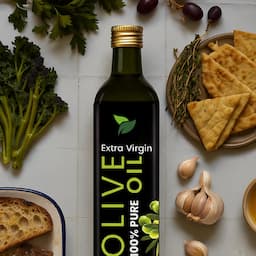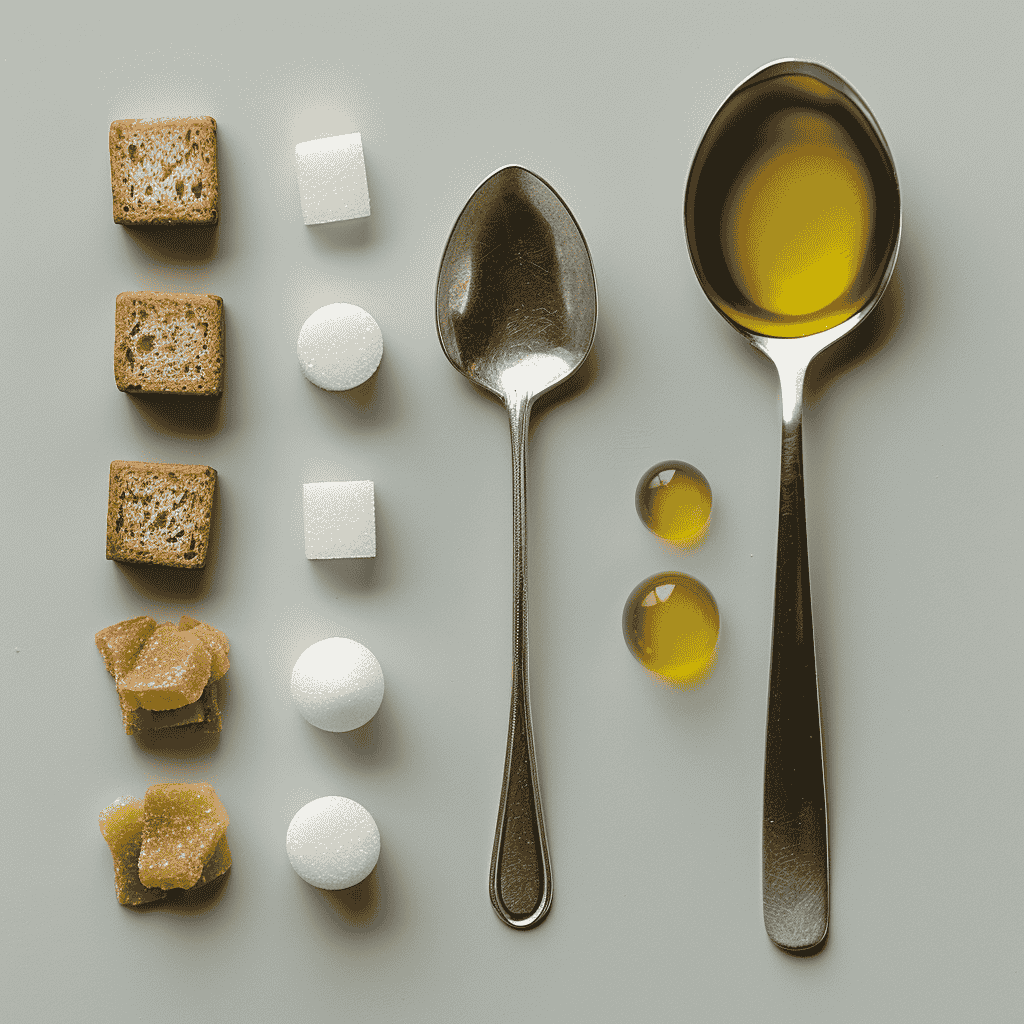
One teaspoon of olive oil contains about 40 calories, all of them coming from fat. That same 1 tsp serving provides roughly 4.5 grams of total fat, including mostly monounsaturated fat, with zero protein, zero carbohydrates, and 0 mg cholesterol.
Many people search for the calories in 1 teaspoon of olive oil because they want a simple answer for dieting, meal prep, salad dressing, or daily cooking. The number is easy to remember, but the nutritional value behind that teaspoon matters too. When we talk about extra virgin olive oil calories, it's important to understand that this oil is energy-dense, yet most of that energy comes from heart-friendly monounsaturated fat rather than the heavier saturated fat profile found in butter or lard.
Calories in 1 Teaspoon of Olive Oil
One teaspoon of olive oil contains 40 calories, and every one of those calories comes from pure fat. A 1 tsp serving gives you about 4.5 grams of total fat, with zero protein, zero carbohydrates, and 0 mg cholesterol.
That 4.5 gram fat serving breaks down into about 3.3 grams of monounsaturated fat, 0.47 grams of polyunsaturated fat, and 0.62 grams of saturated fat. This is why olive oil is often viewed as a better daily fat source when used in moderation.

Nutrition Facts and Nutritional Profile
A 1 teaspoon serving of olive oil delivers about 40 kcal of energy. Beyond the calorie number, it offers a small but useful amount of vitamin E and vitamin K, along with a fatty acid profile dominated by monounsaturated fat. When people look for zaitoon ka tail benefits in urdu, they often discover that this nutrient-rich oil supports heart health, improves good cholesterol levels, and provides antioxidant benefits for overall wellness.
One teaspoon can provide around 1.9 mg vitamin E, which supports immunity, antioxidant defense, healthy skin, and cell protection. It also provides roughly 8.1 micrograms of vitamin K, a nutrient linked to normal bone metabolism and mineralization.
| Nutrient | Approx. Amount in 1 tsp | Notes |
|---|---|---|
| Calories | 40 kcal | All calories come from fat |
| Total Fat | 4.5 g | No protein or carbs |
| Monounsaturated Fat | 3.3 g | Main healthy fat in olive oil |
| Polyunsaturated Fat | 0.47 g | Present in smaller amounts |
| Saturated Fat | 0.62 g | Much lower than butter |
| Vitamin E | 1.9 mg | Supports antioxidant defense |
| Vitamin K | 8.1 mcg | Supports bone metabolism |
When you scale olive oil to 100 grams, the nutritional density becomes even clearer. That amount provides about 821 calories and about 91 grams of total fat, including mostly monounsaturated fat, with no trans fat and only trace levels of other micronutrients.
Olive oil is calorie-dense, so portion size matters. Measuring with a teaspoon instead of free-pouring can make daily calorie tracking much easier.
Calories in Larger Olive Oil Servings
Once you know that 1 teaspoon has 40 calories, it becomes easy to calculate other common serving sizes. This matters if you use olive oil for roasting, sautéing, marinades, or homemade salad dressings.
| Serving Size | Calories | Why It Matters |
|---|---|---|
| 1 teaspoon | 40 | Useful for dressings and portion control |
| 2 teaspoons | 80 | Calories double quickly |
| 1 tablespoon | 119 | Common cooking and drizzle amount |
| 2 tablespoons | 240 | Typical in marinades or large salads |
| 3 tablespoons | 360 | Adds up fast in cooking |
| 4 tablespoons | 480 | Common in batch meal prep |
| 1 cup | 909 | Important for bulk recipes |
Compared with butter, olive oil still contains more calories per teaspoon in many cases, but its fat profile is usually more favorable. Butter carries more saturated fat, while olive oil is richer in monounsaturated fat and antioxidant compounds.
Calories matter, but the type of fat matters too. Olive oil gives you energy along with a better fatty acid profile than many traditional solid fats.
Calories in Extra Virgin and Kalamata Olive Oil
Calories in Extra Virgin Olive Oil (1 tsp)
One teaspoon of extra virgin olive oil also provides about 40 calories. Like regular olive oil, those calories come entirely from fat. The key difference is not the calorie count but the level of natural compounds preserved during processing.
Because extra virgin olive oil is cold-pressed and minimally processed, it retains more aroma, flavor, and polyphenols. That makes it a strong choice for raw use, salad dressing, dipping, and light cooking where quality matters.
Kalamata Olive Oil Calories
Kalamata olive oil, made from olives grown in Greece, also gives about 40 calories per teaspoon. A teaspoon usually weighs around 4.5 grams, so the calorie math stays almost the same as other olive oils.
Those calories still come entirely from fat, with no meaningful protein or carbohydrate content. What changes is the flavor, aroma, and the origin story of the oil rather than the calorie load itself.
Fat Content and Types in Olive Oil
Olive oil is pure fat, but not all fat behaves the same way in the body. Roughly 75% of olive oil’s fat is monounsaturated fat, mainly oleic acid, an omega-9 fatty acid often linked to better cardiovascular and metabolic support when used as part of a balanced diet.
This fat profile helps your body absorb fat-soluble vitamins such as vitamins A, D, E, and K. Quality extra virgin and virgin olive oils may also contain polyphenols like oleuropein, which contribute antioxidant properties.
In practical terms, one teaspoon of olive oil is not just empty calories. It is a concentrated source of energy paired with fats that are generally considered more useful than the saturated fat found in many processed or animal-based alternatives.
Frequently Asked Questions
How many calories are in 1 teaspoon of olive oil?
One teaspoon of olive oil contains about 40 calories, and all of those calories come from fat.
How many calories are in 1 tablespoon of olive oil?
One tablespoon of olive oil contains about 119 calories. That makes it much easier to overuse if you pour without measuring.
Does extra virgin olive oil have fewer calories than regular olive oil?
No. Extra virgin olive oil generally has about the same calories per teaspoon as regular olive oil. The main difference is quality and processing, not calorie count.
Are olive oil calories all from fat?
Yes. Olive oil is pure fat, so its calories come entirely from fat, with no protein and no carbohydrates.
What Our Customers Say
I was tracking calories and needed exact numbers for olive oil. This guide made it clear that 1 teaspoon equals about 40 calories. Now I measure properly instead of guessing, and it really helps with portion control.
✓ Verified PurchaseMujhe diet ke liye exact calories samajhni thi, aur yahan clearly explain kiya gaya hai ke olive oil tsp calories kitni hoti hain. Ab main salad dressing bhi measured use karti hoon — kaafi helpful raha.
✓ Verified PurchaseMain weight loss plan follow kar raha tha aur mujhe olive oil ki exact calories ka idea nahi tha. Ab pata chala ke 1 tsp mein 40 calories hoti hain, to ab main properly measure karta hoon.
✓ Verified PurchaseThis really helped me understand olive oil calories better. I used to pour directly, but now I stick to 1 tsp or 1 tbsp depending on the meal. Much easier to stay within daily calorie limits.
✓ Verified PurchasePehle main andaza laga ke olive oil use karta tha, lekin ab jab pata hai ke calories in a tsp of olive oil kitni hoti hain, to control easy ho gaya hai. Taste bhi acha hai aur health bhi manage ho rahi hai.
✓ Verified Purchase